Choosing the right projector is no longer just about resolution or screen size. Today’s market offers multiple projection technologies, each designed for different use cases, environments and budgets. LED and Laser projectors are now widely adopted, while traditional lamp-based systems and various imaging technologies such as DLP, LCD and LCoS still play an important role.
Understanding the differences between these technologies is essential to make an informed decision, whether you are setting up a home cinema, equipping a meeting room or looking for a compact and portable solution.
How projectors create images: a quick overview
Every projector relies on two main components:
- A light source, which generates the light (LED, Laser or traditional lamp).
- An imaging engine, which shapes this light into an image (DLP, LCD or LCoS).
These two elements work together and can be combined in different ways. For example, a projector may use an LED light source with a DLP imaging engine, or a Laser light source with LCoS technology. This distinction is important, as the final image quality, brightness and usage scenarios depend on both components.

LED & Laser projectors
LED projectors
LED projectors use light-emitting diodes as their light source. Unlike traditional lamps, LEDs do not need warm-up time and maintain stable color performance throughout their lifetime.
One of the main advantages of LED projectors is their long lifespan, often reaching tens of thousands of hours without requiring lamp replacement. This makes them a low-maintenance and reliable solution. LED technology is also energy-efficient and enables compact designs, making it ideal for portable or space-saving projectors.
In terms of image quality, LED projectors deliver vivid and consistent colors, particularly well-suited for Full HD home entertainment, casual gaming or presentations in controlled lighting conditions. However, LED projectors typically offer lower peak brightness than high-end Laser projectors, which means they perform best in darker rooms or environments with limited ambient light.
LED projectors are commonly used for:
- Home cinema in dark or semi-dark rooms
- Portable and compact projection solutions
- Small meeting rooms and personal entertainment
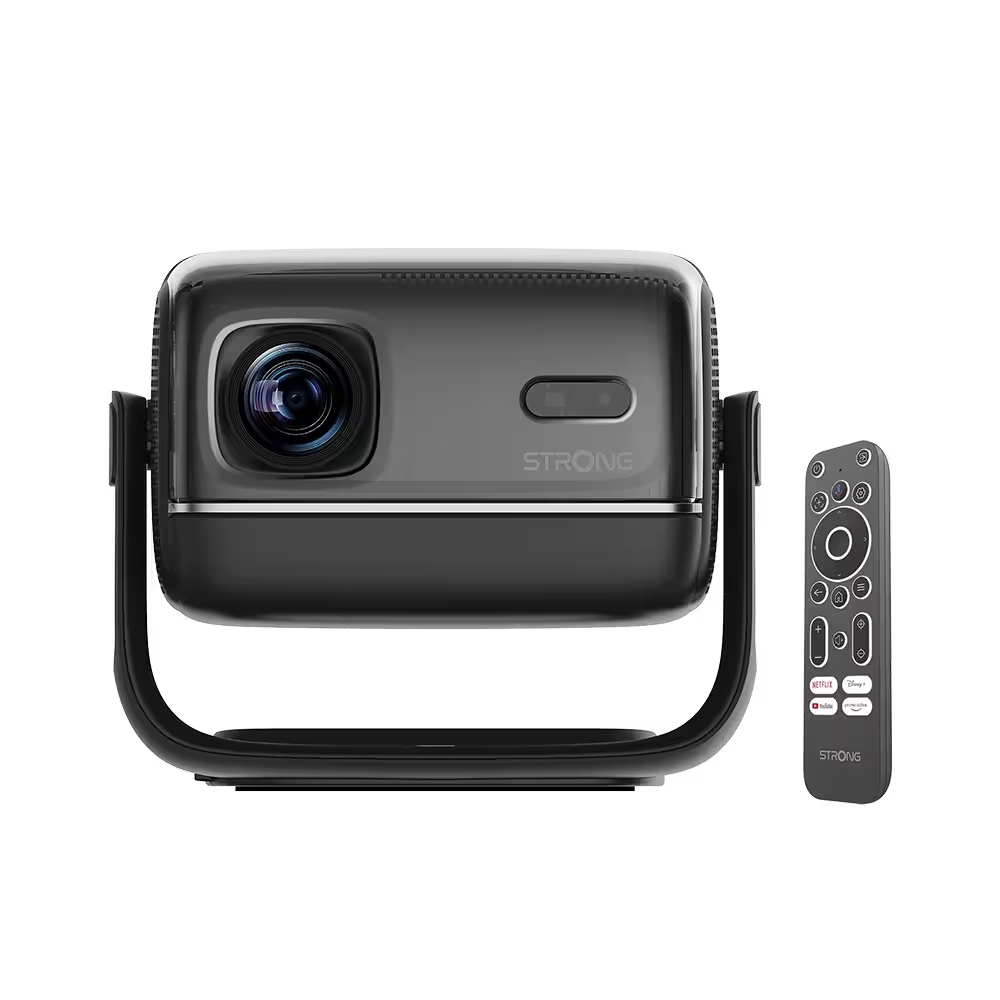
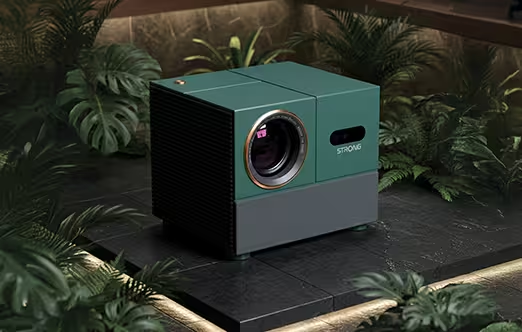
STRONG’s MIRA1 LED FHD fits perfectly into this category, offering a compact Full HD LED solution designed for easy setup and long-term use. It combines LED efficiency with Full HD resolution for clear and reliable image projection.
Laser projectors
Laser projectors use laser diodes, either directly or combined with phosphor technology, to generate light. This technology is known for delivering higher brightness levels, making Laser projectors particularly effective in well-lit rooms or large venues.
Laser projectors also benefit from a very long lifespan and stable brightness over time, similar to LED solutions, but at much higher power levels. As a result, they are often chosen for professional environments such as conference halls, auditoriums and premium home theaters.
While Laser projectors excel in brightness and color volume, they are generally larger and more complex systems. They are typically positioned at the higher end of the market and are best suited for fixed installations rather than portable use.
Common use cases for Laser projectors include:
- Large meeting rooms and auditoriums
- Cinemas and premium home theaters
- Installations requiring high brightness and long operating hours
Other widespread imaging technologies: DLP, LCD and LCoS
In addition to the light source, the imaging engine plays a crucial role in defining the viewing experience.
DLP (Digital Light Processing) projectors use microscopic mirrors to reflect light and create images. They are known for smooth motion rendering and compact optical designs, making them popular in both home and professional environments.
LCD (Liquid Crystal Display) projectors rely on multiple LCD panels to generate images. They typically offer natural color reproduction and are widely used in classrooms and business settings.
LCoS (Liquid Crystal on Silicon) technology combines elements of both DLP and LCD. It is commonly found in high-end home cinema projectors, where image precision and resolution are critical.
Each of these imaging technologies can be paired with LED, Laser or lamp-based light sources, which means the final performance depends on the combination of both elements.
STRONG projectors: MIRA1 LED FHD and the new MIRA-X1 LED FHD
STRONG offers LED-based projection solutions designed for users seeking simplicity, efficiency and Full HD image quality.
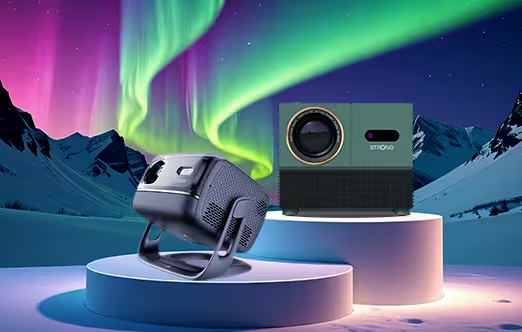
The MIRA1 LED FHD is a compact LED Full HD projector suited for home entertainment and everyday use. Thanks to its LED light source, it offers long operating life and consistent image performance with minimal maintenance.
The new MIRA-X1 LED FHD expands STRONG’s projector range with a refreshed LED Full HD solution. It is designed to meet the needs of users looking for a modern, easy-to-use projector that combines Full HD resolution with the advantages of LED technology, such as fast start-up and long-term reliability.
Both models reflect STRONG’s focus on accessible projection solutions that balance performance, durability and ease of use.
How to choose the right projector
To select the right projector, start by defining your primary use case. For dark-room home entertainment or portable setups, LED projectors offer an excellent balance of image quality, durability and compact design. For environments with significant ambient light or large projection surfaces, Laser projectors provide the brightness and consistency required.
Other factors to consider include native resolution, room size, throw distance and connectivity options. Understanding both the light source and imaging technology will help you choose a projector that truly matches your needs.
Projector technology has evolved significantly, offering users a wide range of options tailored to different environments and expectations. LED projectors stand out for their efficiency, compactness and long lifespan, while Laser projectors dominate high-brightness and large-scale applications.
With solutions like the MIRA1 LED FHD and the new MIRA-X1 LED FHD, STRONG provides reliable LED Full HD projectors designed for modern home and everyday use. By understanding the strengths of each technology, choosing the right projector becomes a clear and confident decision.